
Settlement And Deformation Monitoring Surveys: How Building Movement Is Measured And Managed
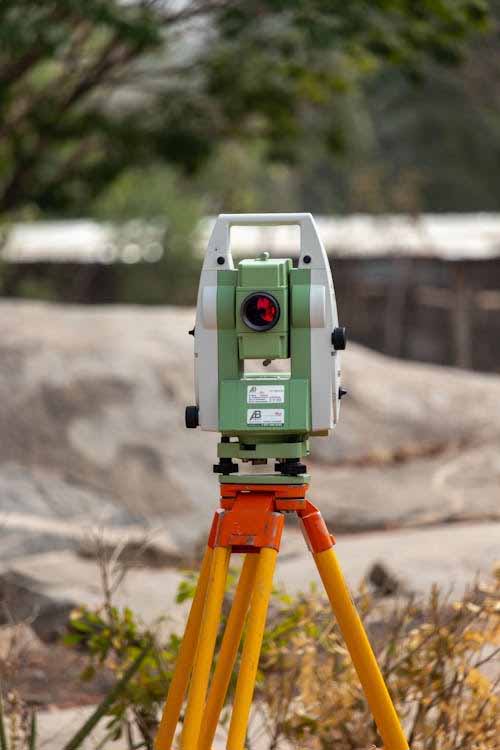
Buildings and surrounding ground can move during construction. Excavations change support conditions, loads are introduced, retaining systems respond to pressure, and neighbouring structures can be affected by work happening close by.
The important question is not simply whether movement exists. It is how much movement has occurred, where it is happening and how that compares with the limits established for the project.
Settlement and deformation monitoring surveys provide repeatable measurements that allow engineers, contractors and project managers to track those changes over time.
We carry out monitoring of settlement and lateral displacement as part of our construction surveying work in Auckland, including structure movement monitoring for high-rise and technically demanding projects.
What Is Settlement Monitoring?
Settlement refers to vertical movement, usually downward, of the ground or a structure.
Some movement may occur as loads change or construction progresses. The significance of that movement depends on the structure, ground conditions, project design and tolerances established by the relevant engineers.
A settlement monitoring survey measures specific points repeatedly so changes in elevation can be detected over time.
Those points might be installed on:
- Existing neighbouring buildings
- New structures
- Retaining walls
- Excavation support systems
- Foundations
- Ground surfaces
- Other structures identified by the project engineer
Rather than relying on visual observations alone, monitoring creates a measurable record.
What Is A Deformation Survey?
Deformation monitoring looks at changes in the position or shape of a structure or site feature.
That can include vertical settlement, horizontal displacement, tilt or movement in another defined direction.
For example, monitoring may be required around a deep excavation where the project team wants to know if an adjacent retaining structure is moving laterally. On a high-rise project, measurements may be used to monitor structural position as construction progresses.
The surveyor’s role is to establish accurate control, take consistent measurements and report changes. Engineers can then use those measurements alongside other technical information to assess what the movement means for the project.
The Baseline Survey Is Critical
Useful monitoring starts before potentially disruptive work begins.
A baseline survey establishes the initial position of each monitoring point. Future observations are compared against those original measurements.
Without a reliable baseline, it becomes much harder to determine when movement occurred or how much change has happened since construction started.
This is why monitoring should be discussed during project planning rather than after someone notices a crack or becomes concerned about movement.
A baseline may be established before:
- Excavation begins
- Piling starts
- Major demolition
- Dewatering
- Retaining works
- Heavy construction close to neighbouring structures
- Significant changes in structural loading
The exact timing and monitoring requirements depend on the project and the advice of the relevant engineer.
Stable Survey Control Matters
Monitoring very small changes requires a stable reference.
If the survey control itself moves, it can create the appearance that the monitored structure has changed position when the reference point is the real problem.
Survey control is therefore established in locations considered suitable for the monitoring programme. Measurements are then carried out using appropriate survey equipment and consistent procedures.
Repeatability is important. The aim is to make each monitoring round comparable with the previous one so genuine changes can be distinguished from measurement variability.
This is one of the reasons experienced construction surveyors are valuable on projects where accuracy needs to be maintained across multiple stages.
Monitoring Is About Change Over Time
One survey gives a position. A monitoring programme gives a trend.
A site might be surveyed before excavation, then at regular intervals throughout the work. The frequency could increase during particularly sensitive stages and reduce once conditions stabilise.
Each monitoring round builds on the previous data.
This helps the project team see:
- If movement has occurred
- The direction of movement
- The rate of change
- If movement appears to be stabilising
- If a particular stage of construction coincides with a change
A series of measurements can therefore be far more useful than a single inspection after concerns arise.
Engineers Set The Response Criteria
Surveyors measure and report movement, but structural or geotechnical engineers typically determine acceptable movement limits and the actions associated with them.
A monitoring plan may include trigger levels established for the project. If measured movement reaches a particular threshold, the monitoring frequency might increase or the engineer may review the site and determine what action is appropriate.
This division of responsibility matters.
Survey information provides objective evidence. Engineering judgement determines the significance of the result within the context of the design, ground conditions and construction methodology.
Good communication between the surveyor, engineer and contractor keeps that process clear.
Why Neighbouring Buildings May Need Monitoring
Construction does not happen in isolation.
On constrained Auckland sites, excavations and new buildings can sit relatively close to neighbouring properties. Basement construction, retaining systems, piling and changes to groundwater conditions can create situations where neighbouring structures need to be monitored.
A pre-construction survey establishes the starting position before work begins. Repeat measurements then provide a record throughout construction.
This can help distinguish existing conditions from later movement and gives all parties clearer information if questions arise.
Our article on site surveys before construction explains why understanding the site and surrounding conditions early is such an important part of construction planning.
High-Rise Projects Create Their Own Surveying Challenges
As structures increase in height, maintaining control over position becomes increasingly important.
Construction teams may need survey input around verticality, floor-to-floor alignment and structural movement as the building progresses. Loads change continuously during construction, while temperature, construction sequence and structural behaviour can all influence measured positions.
Deformation monitoring can provide an independent record of movement through different project stages.
Surveyors may work closely with concrete contractors, structural engineers and site teams so measurements are collected at useful times rather than after key construction stages have passed.
Good coordination is a recurring theme in complex surveying work, which we also discuss in our article on how surveyors work with builders, architects and engineers.
Monitoring Can Protect The Programme As Well As The Structure
Construction monitoring is often discussed in terms of safety, but it also supports project management.
If measurements show conditions are stable, the project team has evidence to support its ongoing decisions. If movement changes, the issue can be escalated early rather than discovered after a larger problem develops.
That can help reduce uncertainty around sensitive work and provides a documented history of site behaviour.
Monitoring reports may also become useful records for engineers, contractors, owners and other stakeholders after the monitored stage is complete.
Plan Monitoring Before Work Begins
The most effective settlement and deformation monitoring programmes are planned around the construction sequence.
Before fieldwork starts, the project team should understand what needs to be monitored, where points will be located, how often measurements are required, who receives the results and what trigger levels apply.
We work with engineers, contractors and developers to provide monitoring data that supports those requirements.
If your Auckland project involves deep excavation, retaining, high-rise construction, sensitive neighbouring structures or another situation where movement needs to be measured over time, get us involved early. Establishing the right baseline before construction begins gives everyone a much stronger reference point for the work that follows.

